Europe

Matt Dunham

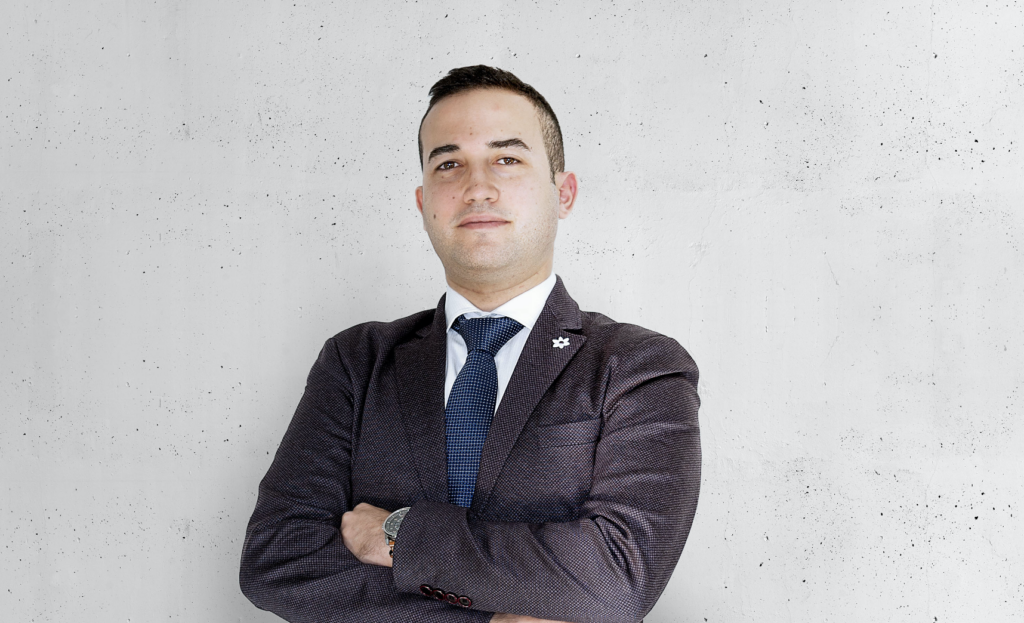
Behind the Curtain Wall: Matt Dunham

In the facade industry we mostly talk about performance, on-time and on-budget deliveries or complex solutions. What we talk about far less, or not at all, is the personal pressure behind the projects. Today’s guest in our blog is Matt Dunham, a former Facade Projects Director who spent decades working on major projects before experiencing a chronic stress and exhaustion  in his early 50s. That turning point led him to step away from the corporate world and start a new path in a certified Advanced Oxygen Advantage instructor, and the founder of a structured online programme for individuals and businesses alike. It’s an entirely different blog post than anything we have done so far, and one that we highly recommend to read at. It’s an honest and thoughtful discussion that many professionals in engineering, design, and construction industry may relate to. In this conversation, Matt reflects on: The hidden pressures of our industry. The early warning signs of burnout. The identity crisis we experience. #facadeengineering #construction #leadership #wellbeing #burnout #engineering Skyline Facades: Can you tell us a few things about your career? Matt: I spent just over 30 years in the construction industry, the majority of that in the facade sector. It started when I was thrown in at the deep end in Dubai in 1999. I had about six months of experience at that point and very little idea of what I was doing, honestly. But I adapted. I learned enough Arabic to communicate on site, worked six days a week and somehow delivered. That first project taught me I was more capable than I’d ever given myself credit for. From there the career built. I came back to the UK in 2004, joined a leading facade company and was made a director 2 years later. Over the following 17 years I managed projects and worked with teams across the UK, China and Switzerland. The roles were complex, high value, high liability. Everything the industry is known for. I left that world at the end of 2023. I have been running Matt Dunham Wellness, my own acupuncture and breathwork clinic in Co. Galway, Ireland and I also run Seven Rivers Wellness alongside my wife Sandra. Skyline: What did success look like from the outside? Matt: From the outside, it looked exactly the way society tells you it should. Director title, company car and project experience from around the world. There were moments I was genuinely proud of. Delivering a complex project, being trusted with major contracts, having people respect the title. I’d worked hard for all of it and it felt like validation that I was worth something. But the title became the identity. I can remember walking around the local town and thinking, “I’m a director, I’m doing well, that’s who I am.” I wasn’t thinking much about who I actually was underneath that. The external markers were everything. And looking back, that’s the thing nobody warns you about: when success becomes your entire identity, you become very fragile. Because when you realise that identity isn’t actually you you’ve nowhere you fall back to, you’ve lost touch with who you actually are. Skyline: But it’s often said that success comes with a cost. What was your cost? Matt: The honest answer is that I paid it across several different areas simultaneously, and I didn’t see most of it at the time. The most obvious cost was in relationships. In my earlier years I was aggressive, I thought that was how you got respect and got things done. What it actually did was create an island for myself. When things got hard at work, as they always do eventually, the people I’d been dismissive of weren’t rushing to help. I’d earned that. At home, the cost was time and presence. At one stage I was commuting two to two and a half hours each way into London every day. I was leaving before the children woke up and then wanting to get back before they went to bed. That created a tug of war between the family man in me and the man who wanted to do a good job. I would say I felt like I was below my best on both counts. The real cost, though, was identity. I had to become someone different to function in that environment. Every morning felt like putting on a mask. And eventually, maintaining that version of yourself takes everything you’ve got, and it got very uncomfortable, I literally felt like someone else whilst I was at work. Skyline: When was the turning point in your life? Matt: There were a few moments that each contributed, but the one I come back to is 2015. I ended up flat on the floor of our house in England with severe back spasms. I couldn’t move for 48 hours. And during those two days of enforced stillness, something shifted. I had time, for the first time in years, to actually think. And the clarity that came out of that was uncomfortable. We needed to completely change our lives. What compounded it was realising that when I was genuinely struggling, most of the people I thought had my back didn’t show up. That was a very sharp lesson about how transactional a lot of relationships had become. Not entirely their fault, to be fair. We’d bought a house in Ireland the year before. Sandra is Irish, and moving there felt like the right reset. We relocated in 2016 which was great but slowly I started to see the same patterns emerging and I started to feel genuinely unfulfilled in the corporate world around 2017, and enrolled in a three-year acupuncture course in 2018. Another pivotal moment that changed everything was a breathing retreat in Costa Rica in early 2023. Sandra was going to book it for herself and I didn’t want to miss a trip like that so I read a few books and went along with no real expectations. Within the first day

Behind the Curtain Wall: Matt Dunham Read More »

The Future of Facades

The Next Era of Facades

Our Executive Director Petros Karatzas is hosted in the October – December 2025 edition of Window & Facades magazine of WFM Media. Petros’ article is featured -along with other notable facade engineering experts- in a wider discussion about Intelligent and Responsive Design for the Next Era of Facades. Full article is also available in the following link https://wfmmedia.com/magazine/window-facade-magazine-global-october-december-2025/ as well as to our official LinkedIn company page. Our thanks to Shefali Bisht, Associate Editor for F&F Media and Publications for her kind collaboration. WFM Media: How do you see building facades evolving over the next decade, especially with rapid advances in materials and technology. Petros: When I look ahead at how building facades will evolve over the next decade, I’m both optimistic and realistic. Our industry often talks about revolutionary change, like materials that will solve everything, technologies that will transform the way buildings behave, but in practice, progress tends to move slower than the headlines suggest. And I don’t say that as a limitation but it’s simply the nature of an industry where safety, durability, and long-term performance matter more than speed. If we just look at how other industries, like transportation or telecommunications have evolved the last 20-30 years, we understand that construction industry moves at a slower pace. What I do expect is probably a steady but meaningful shift toward facades that are more intelligent and more responsible. We will continue to see incremental advances in materials such as glazing that performs better, composites that are lighter, coatings that last longer, and these improvements, though usually not dramatic, have a cumulative impact that is often underestimated. The real change will come from how these materials are combined with digital tools. The integration of sensors, automation, and data-driven design can help facades to respond more intuitively to their environment, improving comfort and efficiency without drawing attention to the technology behind the scenes. I also believe manufacturing and construction processes will become more refined. Prefabrication, better coordination through BIM, and more precise quality control will gradually reshape how facades are delivered. These shifts might not be as visible as new materials, but they can significantly improve performance and reduce waste—two priorities our industry can no longer ignore. WFM Media: What emerging facade innovations excite you the most, and why do you think will make a real difference to future buildings. Petros: When I think about facade innovations that excite me, I tend to focus less on the “headline technologies” and more on the developments that can have a positive impact on our everyday practice. Our industry doesn’t change overnight, so the innovations that matter the most are probably the ones that can actually be adopted at scale and not just admired in prototypes. An area I find particularly interesting is the quiet progress happening in high-performance glazing and coatings. We see developments in materials that manage heat and light much more intelligently, like glass that can reduce solar gain without darkening the space or blocking views, and coatings that maintain their performance longer in harsh climates. I know these sound like incremental improvements, but in facades, these incremental improvements across millions of square meters can have a massive impact. I am also encouraged by the evolution of prefabricated and unitized facade systems. The precision and quality that can be achieved in controlled manufacturing environments is impressive, and it opens the door to more predictable performance, faster installation, and less waste. This is one of those areas where innovation doesn’t have to be flashy to be transformative. What excites me most is the combination of these ideas: better materials, smarter systems, and more precise delivery methods. Individually their impact might not be great but the combination of these can improve the entire lifecycle of the building in a grounded and practical way that I believe the industry is ready for. WFM Media: Sustainability is becoming essential rather than optional. How can future facades contribute meaningfully to energy efficiency and climate-responsive design. Petros: When we talk about sustainability in facades, the simplest way is to repeat the same phrases about responsibility and climate goals. But reality is, as always, more complex. In practice, sustainability goals often contrast with commercial pressures, and many decisions are naturally driven by profit rather than performance. I think it’s important to acknowledge that openly, because pretending otherwise doesn’t help the industry move forward. A good example is something we all face at some point: what are we doing when the highest energy-consumption orientation of a building also offers the best view, and therefore the highest commercial value? The sustainable solution might be to reduce glazing, add shading, or rethink the massing, but the financial argument pushes in the opposite direction. In these cases, there is no perfect answer; there is only a careful balancing solution. This is where I believe facade design can make a meaningful difference, not by insisting on idealistic solutions that won’t be accepted by the investors, but by finding smart ways to reconcile competing priorities. If a fully glazed facade is commercially essential, then the design has to compensate through better glass selection, improved insulation, intelligent shading, or to integrate other passive strategies elsewhere in the building. The goal becomes minimizing the impact rather than eliminating it, because eliminating it may simply not be applicable. We should also recognize that sustainability often fails not because of a lack of knowledge, but because the long-term benefits rarely align with short-term financial models. Energy savings accrue over years, while construction costs appear upfront. Until those two timelines are better aligned, the tension remains. Still, facade designers can do a lot even within these constraints. They can reduce operational energy demand through considered design. They can lower embodied carbon through smarter material choices. They can maintain high performance over time through monitoring and early maintenance. And importantly, they can help clients understand that a more efficient facade is not just an environmental decision but it also reduces risk, improves comfort, and ultimately supports the building’s

The Next Era of Facades Read More »

Natural Anodized Cladding: Dirk Verwimp

Natural Anodized Aluminium Cladding Panels have been around the architectural market for several decades now. The use of natural anodizing though in cladding panels have not been as widespread as natural anodizing in extrusion profiles. Though, it is indeed an excellent option to consider with. We discuss with Dirk Verwimp, an expert in this field and currently Business Unit Manager for Almeco Group in Italy. Skyline Facades: Dirk, what are the advantages of natural anodized cladding panels? Dirk: There are actually several. To start with, the anodic layer is inherent to the aluminium substrate, so it will never peel, chip or chalk. Anodising for facade cladding is a durable and sustainable solution with an unlimited design lifetime. In case of replacing the panel, the material is very easy to recycle at a fraction of the energy to produce new aluminium. The material is UV resistant and the metallic lusture and gloss will be maintained over time. Pre-anodised facade cladding is easy to maintain and is graffiti proof. And finally, it is a 100% pure aluminium product with an attractive aesthetic appearance. Umeus Student Home, Copenhagen / Denmark Skyline: There are pre-anodized cladding panels and post-anodized cladding panels. What are the actual differences? Dirk: Selecting pre-anodising will enhance your cost efficiency as the material can be post transformed into any type of cladding. Further, due to the constant and automatic processing on coils, the material will have an excellent uniformity. After the process , the coils can be levelled and cut into stress free sheets, which avoids tension in the cassettes. Post anodising is mostly selected in case of extruded profiles or for very complex structures. As the process is manual, it is very work intensive which is reflected in the cost. As one load contains no more than 20-30 m2, there is a risk of colour and gloss variation on your facade. With post anodising you can achieve higher anodic layers, as prescribed in the British Standards, but this is in fact not always an insurance for better quality. These high anodic layers are often forced which results in a soft top layer that can be reduced over time. Ideally pre anodised material is used for large facade surfaces where uniformity is essential, with the combination of batch anodised extruded profiles for the trims or finishing parts. Learown Fuda Square, Shenzhen, China Skyline: What are the finishes that can be achieved with natural anodizing? As architects, or façade consultants, do we have a wide range to choose from? Dirk: Generally anodising can be provided on different type of textures. Standard and well known in the market is the mill finish surface, which is a smooth and satin surface. But more and more different textures are requested by architects, where brushed, sand blasted and BRITE finishes or textures can be offered. The pre-treatment on these textures are different and usually the chemical etching part in the process is skipped in order to maintain as much as gloss or brushed definition as possible. Besides the different textures, modern natural anodizing offers also a wide range of colours: natural, gold, bronze, copper and zinc. Each of these colours will look different on different textures. This allows the architect to maximise its creativity by combining the preferred textures with the preferred colour tone. Bloom College, Wavrin / France Skyline: Can you explain us briefly the production process for natural anodized cladding? Dirk: The standard alloy for mill finish anodised aluminium is 5005 H14. The optimal anodic layer is 15 microns for exterior use, depending on the specification. We can  offer also 20 and 25 microns on coil depending on the location of the project. The process starts with a 3 step pre-treatment: degreasing for oil removal, etching for defining the right gloss and neutralisation to clean the smut and block the pH entering the acidic anodising tank. After the anodising step, the material can be coloured, where pigments or metal salt is deposited into the porous structure of the anodic layer. Finally, the material is sealed in a hot water tank, closing the porous structure and fixing the colour. It is important to opt for a QUALANOD certified supplier which ensures the quality and processing according European norms and standards. E-Sport Arena, Hangzhou / China Skyline: Is anodized cracking, when bended, an issue? Dirk: If you produce cassettes or other types of panels from pre-anodised aluminium, you will always have superficial hairlines perpendicular to the rolling mill directions. This superficial hairlines, also called crazing, is a natural effect and only visible under certain angels and light. This phenomena is purely aesthetical and will not affect the quality nor the warranty. We always recommend to reduce the bending radius to a minimum (in accordance with the limits of the metal substrate) in order to minimise the area of the crazing. Chang’An Cloud, China Skyline: What is the actual lifetime of a natural anodized cladding panel and what are the factors that affect it? Dirk: Natural anodized suppliers provide different warranties, for us  25 years of warranty is a standard, but in fact the design life is unlimited. The material is 100% pure aluminium and has a very strong resistance towards weathering. Factors that can influence the lifetime is direct contact with cement, acidic or alkaline substances which can attack the anodic layer. This must be avoided.

Natural Anodized Cladding: Dirk Verwimp Read More »

Ventilation and A/C System Design Adaptation: Frederik Winther

Is your building future weatherproof? Future weather will bring increasingly higher temperatures and humidity. This poses a challenge for the indoor climate in our buildings, as cooling and ventilation system design is based on historical weather data that is more than 10 years old. If we don’t change our design practices, our buildings will overheat. In this article, Frederik Winther – Senior Specialist Manager in Ramboll Denmark – along with his colleague Dragos Bogatu, explore the challenges that the future climate poses to our buildings’ ventilation and air conditioning systems and outline the change in approach to design and solutions needed to mitigate them. Frederik works for almost 12 years at Rambøll Danmark’s main office in Copenhagen. Started as a consulting engineer in the Department of Indoor Climate and HVAC. After 3 years at Rambøll he started his PhD project on Intelligent Glazed Facades. Did research on the potential of facades in future low energy buildings as well as experimental investigations on the performance of advanced facades. He has developed numerical calculation methodologies for advanced facade technologies such as PCM in glazing, dynamic g-/U-value technologies. Having been awarded his PhD degree he was employed at Rambøll working in greater depth with facade design and numerical analysis of thermal building simulations and CFD calculations. His work consists of consultancy work for many projects. We talk with Frederik about Ventilation and Air Condition System Design Adaptation to Climate Change and the subsequent challenges, approach and solutions. Original article was posted by Frederik in LinkedIn https://www.linkedin.com/feed/update/urn:li:activity:7208776945730265089/ Ventilation and air conditioning system design adaptation to climate change: Challenges, approach, and solutions Future weather will bring increasingly higher temperatures and humidity. This poses a challenge for the indoor climate in our homes, but especially in large buildings, as cooling and ventilation system design is based on historical weather data that is more than 10 years old. If we don’t change our design practices, our buildings will overheat. A change in mindset but also policy recommendations are required.   Expected changes in the Danish climate. Denmark’s future climate won’t only include more frequent storms, heatwaves, and heavy rainfall. It will also become warmer, with increased humidity. This is evident from DMI’s new Climate Atlas for Denmark’s weather [1] based on projections from the UN’s climate panel and Aalborg University, Department of the Built Environment, covering the period from 2030 to 2100. Annual temperatures are expected to rise by over 3°C. Looking at the number of heating degree days (HDD) – a measure of coldness – they will decrease by almost 30%, from 3319 HDD in the period 2001-2010 to 2271 HDD in 2090. Humidity will also increase significantly, as shown in Figure 1, based on data projections from IPCC [2], [3]. The number of hours per year with water content higher than the current 12.5 g/kg (which we currently design our ventilation systems for) will rise from 67 hours (~9 workdays) to up to ~250 hours (~34 workdays) by 2040. Figure 1. Humidity levels as a function of projected weather data in Copenhagen, Denmark compared to the Danish design reference year [2], [3], [4]. At the same time, rising temperatures and humidity will impact our perception of heat. Higher humidity makes it harder for the skin to dissipate heat. When combined with high temperatures, heat transfers from the air to the skin, making us feel significantly warmer. Both existing and future buildings must adapt to significantly different conditions than what we are used to. Failing to account for the warmer and more humid weather, will have detrimental consequences for the indoor climate and the cooling and ventilation systems we rely on. Homeowners are already grappling with warmer and more humid weather. If anyone doubts that these changes affect the indoor climate of our buildings, they need only ask homeowners. In the survey ‘Danskerne i det byggede miljø’ [5], conducted by Realdania and Videnscentret Bolius, over 12% of residents in homes built after 2000 report that their homes are too hot. Especially during the summer, overheating is a real issue. The challenge lies in larger window areas present in new buildings and changes in architectural preferences, which do not provide the same opportunities for natural ventilation and solar shading as older homes do. Mechanical ventilation and cooling are not common practice in Danish homes. Therefore, the indoor climate challenges, in newer residential construction, cannot be directly compared to large-scale buildings. However, it does emphasize the consequences of a changing climate on our indoor environment and the need for change in design approaches. Historical weather data does not consider climate change. Despite projections showing our climatic future, we still use 10-year-old historical weather data when designing cooling and ventilation systems. While we gradually adjust the standards we design for, the changes are insufficient given the climate shifts we anticipate. We risk having buildings where cooling and ventilation systems cannot maintain satisfactory air quality and humidity levels for their intended use. The consequence is overheating. This poses problems for building occupants, affecting well-being, health, and cognition. It’s also a challenge for building operators, as operating undersized systems becomes more expensive. Lastly, it’s an environmental concern because energy-intensive systems consume more than they should. Consider an average office building as an example. Calculations suggest that without other adjustments, we should increase the size of cooling surfaces in ventilation systems by up to 25% and enhance cooling system efficiency by up to 50% by 2040 compared to current Danish standards. Even by 2030, within the lifespan of new installations, the increase is significant. In some cases, simply increasing performance won’t suffice. In extreme cases, existing systems may need improvement or complete replacement with more powerful ones to handle future weather conditions. On the other hand, undersized cooling and ventilation systems are costly to operate due to high energy expenses and maintenance costs. The solution is a climate resilient design. Climate resilience refers to the ability of the designed systems and assets to withstand shocks and stresses as well as the

Ventilation and A/C System Design Adaptation: Frederik Winther Read More »

Facade Engineer Greece

Facade Engineering in Greece: Anna Ioannidou Kati

Anna Ioannidou Kati is a Senior Facade Engineer in one of the most famous facade engineering offices globally, Eckersley O’ Callaghan (EOC). She’s holding a Civil Engineering degree from Technical University of Athens and an M.Sc. in Building Engineering from Delft University in Netherlands. Based in London for the last 5 years, Anna managed the Facade Engineering services for Piraeus Tower, probably the first project in Greece where a facade consultant was appointed. We discuss with Anna her experience, as well as the reasons why Facade Engineering is a common practice in many countries globally but not in Greece, at least yet. Anna, what is the real value that facade engineering brings in the projects? Facade engineering can bring significant value to projects. As a discipline it aims to enhance both architectural aesthetics and performance of building envelopes. It looks at how the facade can influence energy efficiency, daylight, indoor thermal and visual comfort of buildings. As facade engineers we also investigate and ensure the buildability and structural integrity of the architectural proposals from early stages.  Overall, facade engineering plays a crucial role in achieving sustainable, visually appealing, and high-performing building envelopes. Why do you believe that facade engineering is not popular in Greece yet? As far as I am concerned, Piraeus Tower was the first project that this function actually applied to.  Facade engineering is a relatively new discipline not only in Greece, but even across the world. Architects and engineers were always collaborating to explore new materials and technologies for building envelopes, but the term and specialization ‘facade engineering’ probably emerged in the last 50 years or so. With the advent of modern construction methods and the increasing complexity of building designs, facade engineering became more and more popular. Also, the increasingly strict regulations related with sustainability that slowly came into effect in the last 10-15 years increased the complexity of facade designs and led to a demand for specialist consultants that could advise on facade technologies and performance. In Greece, traditionally, there was an intentional simplicity in architectural designs of building envelopes. This tendency likely stemmed from our country’s high seismic activity, leading to simple buildings in plan, and simple architectural elements and materials to the building exterior. Of course, the recent recession contributed to the construction industry being dormant for a few years. During this period, very few large and complex buildings were designed and constructed, and thus the circumstances did not allow for this discipline to emerge and grow like the rest of Europe and abroad. Would you think that this discipline will have bigger demand in Greece in the coming years? Greece seems to be entering a new era as it is starting to experience a significant growth in the construction sector. Private and government initiatives are slowly driving investments in new construction developments. We are currently seeing various notable new projects under construction, such as large mix-use buildings, high-rise towers, and refurbishments. We also see more and more ambitious and complex designs from Architects who are not afraid to explore new materials and technologies. This is where facade engineering can play a crucial role guiding Architects and Clients in achieving buildable, sustainable, and high-performing envelopes. Therefore, I do believe this discipline is going to grow in Greece in the next few years. What was the biggest challenge that you faced in Piraeus Tower? The biggest challenge we faced was probably the construction method of the facade. The industry across the world has embraced the design of unitised curtain walling for tall and repetitive buildings, such as Piraeus Tower, due to the benefits of the off-site manufacturing. However, due to the lack of tall buildings in Greece, this system had never been applied in any project and there was an understandable hesitance on the ability of the local market to deliver this project technically and within time and budget. During this process we had multiple discussions with Greek system suppliers and installers. We understood that the industry had the required ‘know-how’, they were only waiting for the right opportunity to put this knowledge into effect. I am very glad that Piraeus Tower was built with a unitised system, as this makes it the first building in Greece where this technology was applied and stigmatizes a new era for constructing tall buildings in Greece. In what stage exactly did you get involved in this project?  Ilias Papageorgiou from PILA reached out to EOC during the competition stage to provide technical support on their facade design proposal for Piraeus Tower. During the competition, we explored options for the construction method of the facade and investigated the optimization of the external shading fins. It is very fulfilling being involved in projects from such early stages, as this is the time when important decisions are made. We delivered a technically feasible design proposal and provided confidence to the Client that the design was buildable and efficient. Collaborating with architects for competitions is something we do very often, and we see more and more architects requesting our input due to the increased value we can bring in projects. Tell us a few things about the dynamics in the project team. By project team, I mean the Architect, the Client, the General Contractor, the Facade Contractor. Dynamics in project teams can vary depending on the type of project and the procurement process. The Architect is responsible for designing the overall appearance of the building and often acts as lead designer. They need to work closely with Clients to understand their vision, programme and budget constraints. Clients on the other hand, need to be actively involved in the decision-making process and constantly provide feedback on the design team’s proposals. The General Contractor is responsible for managing the construction phase of the project, while the Facade Contractor is appointed to design and build the building envelope. The sooner the General Contractor is involved in the project, the more influence they can have on the design solutions. As facade engineers, we often

Facade Engineering in Greece: Anna Ioannidou Kati Read More »

Ventilates Facades

Ventilated Facades, Fire Safety: No need for a zero-sum game

The concept and the history of building ventilated façades is not something novel. Actually the first examples of building facades are met in medieval Europe. Wood was the dominant material for the construction of facades since it was easily sourced from the vast forests that existed in Western Europe during this historical period. West Stow, Suffolk | UK – 5th– 7th Century AD (Building Reconstruction – Archeological Site If we try to find a benchmark project in contemporary building, we could arrive at no other than Flatiron Building in New York since it used metal structure and cladding. A significant parameter for the design of Flatiron has been the revision of the New York Building Act in 1892, which abrogated the requirement for masonry on the ground of fire safety reasons and gave rise to the formation of plenty of the modern building methods. Namely, the creation of a shell, which is suspended through a secondary level of support system on the primary frame of the building. In the case of Flatiron Building, glazed ceramic panels are the dominant cladding material of the facades. Flatiron, New York | USA – 1902 Today, the usage of ventilated facades with the simultaneous integration of a multitude of different materials –natural and artificial, such as metal, glass, ceramics, concrete, composite wood, plastics etc. has prevailed worldwide. Naturally, the progress in the field of materials science has been an important factor for the realization of the modern building. The Beam on Farmer, Phoenix AZ | USA (Aluminum Panels) The ventilated façade is synonymous with the structure of a multi-layered shell. A key feature of the ventilated façade is the clear separation of structural elements that are in direct contact with the interior or exterior space, as follows: – External cladding – Air gap – External insulation – Internal masonry The creation of air gap throughout the height of the building, in which the circulation of air remains unobstructed, but at a higher temperature than that of the natural environment, implies the circulation of air in conditions of natural attraction. Briefly, the air enters the gap, is further heated by the absorbed solar radiation and is emitted by the cladding, moves upwards, creates a vacuum, which tends to be filled again with air and hence continuous ventilation is ensured within the shell. Results of external thermal insulation and natural ventilation can be summarized as follows: – Improving thermal comfort in the interior of the building. – Saving energy for both heating and cooling, through the reduction of thermal losses. – Protection against moisture, as the external cladding is a first protective level while at the same time ventilation accelerates the removal of residual moisture. The three axes for the sustainability of buildings as below: – Limitation of the environmental footprint (Construction – Usage) – Ensuring the optimum operation of the building over time. – Enhancing the comfort levels for its users. The fireproofing principal of the ventilated façade as a fire transmitting factor The fundamental operating principle of the ventilated façade is at the same time its weakest point in terms of fire transmission. The natural attraction of the air within the façade dramatically accelerates the vertical fire spread of fire, consequently facilitating its expansion throughout the building. In this way, even a small localized fire can potentially evolve into a large scale fire to the whole building. Grenfell Tower in London has been the most notable case of building fire since several decades. A residential building of 24 floors, initially erected in 1967 and renovated in 2015-2016 with ventilated facades cladded with LDPE Aluminium Composite Panels and insulated with PIR. The non-compliance with Fire Regulation act was considered as the root cause for the tragic death of 72 people. A typical example of the fire spread in Grenfell Tower was while the first fire hearth was detected on 00:54 and by – 01:30, the fire had reached the roof of the building through vertical transmission and was totally out of control. Istanbul / Turkey Vertical fire expansion in 24-storey building. It is worth noting that while the building seems mostly unharmed, there is a vertical fire across the entire side of the building with possible disastrous effect. Tackling Design Methods (Fire-Barriers and Fire Compartmentalization) It is possible to maintain the advantages offered by ventilated facades while ensuring fire protection. The placement of fire barriers horizontally and vertically in order to fire compartmentalize the façade in accordance with the General Fire Safety of the building answers the existing challenge. A fire barrier is placed horizontally with fire-resistance sealing tape, leaving a gap of 25-50 mm from the surface of the cladding. In this way, the ventilation of the façade is ensured while it is interrupted in the case of fire. (1) Complete vertical fire barrier (compressed Rockwool in aluminium shell. (2) «Open» horizontal fire barrier with fire-resistant sealing tape. (3) Fire-inflatable sealing tape. Example of Facade Engineering Study as above. In this case, and in the particular Unitized System with embedded brickslips, we can see the vertical fire-barriers at the side of the unitized module and two vertical fire barriers with the fire-inflatable membrane. Re-defining the proper function of facade in existing buildings Case study with residential complex in Stratford, London built in 2006-2007. In 2021 it joined a State Funding Program in order to harmonize with the Fire Protection Regulation. The Grenfell building tragedy has triggered the imperative to carry out checks regarding the provided safety of buildings in Great Britain. The range of interventions required is extensive, both in terms of replacing the materials of the facades with fire-resistant ones, as well as in redesigning the shell by creating fire compartments. The materials replaced are: – Aluminium Composite Panels with 3mm Solid Aluminium Sheets. – Wood cladding sheets with fibrocement sheets. – Wooden decking floors with aluminium ones. – External thermal insulation system with corresponding non-flammable. – Spandrel glass curtain panels with corresponding with non-flammable core. – Brickslip cladding due to absence

Ventilated Facades, Fire Safety: No need for a zero-sum game Read More »

Ph.D. award to our Anastasia Sakka

We are very proud for our Projects Director and Principal Anastasia Sakka, who has just received her Doctor of Philosophy degree in Architecture from the University of Edinburg in Scotland. It was a beautiful journey that started 10 years ago and was officially completed yesterday in a traditional ceremony, so typical for UK universities. After all the hard work that Anastasia has put in, she sure deserves the highest degree that a student can have. It is a great success for Anastasia and her family  (yes, that includes us also -), having proved again how dedicated and strong-willed she is. A Ph.D degree is much more than a mere gain of a qualification to be proud of; it is also the incredible experiences along the way. Our best wishes to our lovely Principal for the future -)) We should not forget to express our sincere gratitude to the best supervisor we could have, Professor Iain Boyd Whyte. #facadeengineering #greece #skylinefacades

Ph.D. award to our Anastasia Sakka Read More »

Petko Pachev for Fire-Rated Windows

Petko Pachev is a leading figure in the aluminium market of Bulgaria and an expert in all kinds of extruded products. He has more than 17 years of experience in the fields of business and product development of aluminium systems. Today, we are seeking for his experience in Fire Rated Systems for Windows and Doors. What are fire-rated systems? Those are systems that are used in fire protection and evacuation areas in buildings. The most common types are made of steel or aluminum. The steel systems are mostly used in places where the design and appearance are not the main goal while the case with aluminum solutions is the opposite. The Aluminum systems with FR glass fillings are much more aesthetic and add value to offices and residential buildings. What EI-60, EI90, EI120 etc. means? The EI means integrity and insulation. E – Integrity. This is the ability of the system to stop fire from spreading to an unexposed side as a result of penetration of flames or smoke. I – Insulation. This is the ability of the system to restrict the temperature rise of the non-heated side to below specified levels during the fire. All the above-mentioned symbols are followed by as a time limit in minutes. The number after a given symbol shows the time the performance criteria is fulfilled during a standardized fire test.      Ex: EI30, EI60, EI90 etc. Do such systems need special equipment / knowledge by subcontractors? The production of aluminum fire-rated systems is almost the same as the solutions with non-FR classes yet there are some very specific machining, assembly and installation processes that are far more complex and require specialized knowledge and accreditation. The main differences are the following: The fire-rated systems are much heavier than the standard ones therefore special equipment for handling and transportation is required. It takes more time for machining and assembly of the fire-rated systems. Is there anything else subcontractors should have in mind concerning fire-rated solutions? It is very often that I see inquiries for very big dimensions of fire-rated glasses and subcontractors should have in mind the heavy weight of the fire-rated glass. For example: EI60 glass weight is around 45kg/m², EI90 glass is around 50kg/m², EI120 glass is around 60kg/m². Decision makers should think about situations when a glass need to be replaced when the building is operational. In cases where aesthetics is a must I advise my partners to use fire-rated solution with silicon gap on vertical instead of aluminum profiles. I also recommend to subcontractors to choose fire-rated glass with the longest warranty period as the glass cost is among the most significant in the final product. Finally, and not least importantly, the decisions about fire-rated systems should be taken always having in mind that those solutions are intended to save lives.

Petko Pachev for Fire-Rated Windows Read More »

Skyline Facades

Shop Drawings Rainscreen Cladding / London

Part of our Shop Drawings submission for our latest project in the UK. It is a 6-storey building with area of 60.000 ft2 in the heart of London. Scope of works for our Facade Engineering team is Shop Drawings, Fabrication Drawings, Installation Drawings and Material Take-Off for Terracotta Cladding and Metal Panels. The below detail drawing refer to Aluminium Rainscreen Cladding Vertical Detail at Roof Level Interface to Terracotta. Visit us in https://skylinefacades.com or send us email at info@skylinefacades.com #facadeengineering #skylinefacades #london #uk #teamwork #architecture #project #facade #engineering #shopdrawings #drafting #outsourcing #buildingenvelope #cladding #metalcladding #aluminium #rainscreen #glassfacade #drawings #buildings #envelope #glazing #doorsandwindows #facadedesign #terracotta # #facadeconsultancy #facadestructuralengineering Read More

Shop Drawings Rainscreen Cladding / London Read More »

Stone Re-Cladding

Shop Drawings Stone Re-Cladding in London

Part of our Shop Drawings submission for our latest project in London, UK. This is one of the largest ones that we have worked so far, it is actually re-cladding of a very prestigious hotel project in the heart of London. Scope of works for our facade team is Design and Engineering for Stone Cladding. The below drawings refer to Section Detail – Typical Handset Stone to Stick System Glass. #facadeengineering #skylinefacades #recladding #london #uk #facadeconsultants #project #buildings #envelope #facade #engineering #shopdrawing #drafting #outsourcing #architecture #buildingenvelope #stone #cladding #facadeconsultancy #teamwork #glazing #facadedesign #drawings #glassfacade #doorsandwindows #facadestructuralengineering Read More

Shop Drawings Stone Re-Cladding in London Read More »