
In the facade industry we mostly talk about performance, on-time and on-budget deliveries or complex solutions. What we talk about far less, or not at all, is the personal pressure behind the projects.
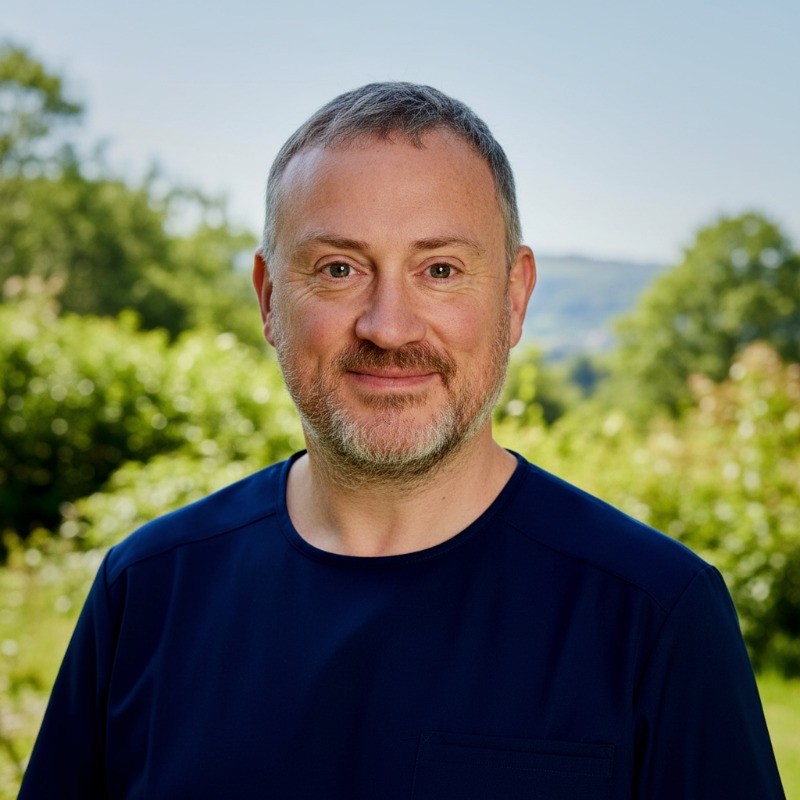
Today’s guest in our blog is Matt Dunham, a former Facade Projects Director who spent decades working on major projects before experiencing a chronic stress and exhaustion in his early 50s. That turning point led him to step away from the corporate world and start a new path in a certified Advanced Oxygen Advantage instructor, and the founder of a structured online programme for individuals and businesses alike.
It’s an entirely different blog post than anything we have done so far, and one that we highly recommend to read at. It’s an honest and thoughtful discussion that many professionals in engineering, design, and construction industry may relate to.
In this conversation, Matt reflects on:
- The hidden pressures of our industry.
- The early warning signs of burnout.
- The identity crisis we experience.
#facadeengineering #construction #leadership #wellbeing #burnout #engineering
Skyline Facades: Can you tell us a few things about your career?
Matt: I spent just over 30 years in the construction industry, the majority of that in the facade sector. It started when I was thrown in at the deep end in Dubai in 1999. I had about six months of experience at that point and very little idea of what I was doing, honestly. But I adapted. I learned enough Arabic to communicate on site, worked six days a week and somehow delivered. That first project taught me I was more capable than I’d ever given myself credit for.
From there the career built. I came back to the UK in 2004, joined a leading facade company and was made a director 2 years later. Over the following 17 years I managed projects and worked with teams across the UK, China and Switzerland. The roles were complex, high value, high liability. Everything the industry is known for.
I left that world at the end of 2023. I have been running Matt Dunham Wellness, my own acupuncture and breathwork clinic in Co. Galway, Ireland and I also run Seven Rivers Wellness alongside my wife Sandra.

Skyline: What did success look like from the outside?
Matt: From the outside, it looked exactly the way society tells you it should. Director title, company car and project experience from around the world.
There were moments I was genuinely proud of. Delivering a complex project, being trusted with major contracts, having people respect the title. I’d worked hard for all of it and it felt like validation that I was worth something.
But the title became the identity. I can remember walking around the local town and thinking, “I’m a director, I’m doing well, that’s who I am.” I wasn’t thinking much about who I actually was underneath that. The external markers were everything. And looking back, that’s the thing nobody warns you about: when success becomes your entire identity, you become very fragile. Because when you realise that identity isn’t actually you you’ve nowhere you fall back to, you’ve lost touch with who you actually are.
Skyline: But it’s often said that success comes with a cost. What was your cost?
Matt: The honest answer is that I paid it across several different areas simultaneously, and I didn’t see most of it at the time.
The most obvious cost was in relationships. In my earlier years I was aggressive, I thought that was how you got respect and got things done. What it actually did was create an island for myself. When things got hard at work, as they always do eventually, the people I’d been dismissive of weren’t rushing to help. I’d earned that.
At home, the cost was time and presence. At one stage I was commuting two to two and a half hours each way into London every day. I was leaving before the children woke up and then wanting to get back before they went to bed. That created a tug of war between the family man in me and the man who wanted to do a good job. I would say I felt like I was below my best on both counts.
The real cost, though, was identity. I had to become someone different to function in that environment. Every morning felt like putting on a mask. And eventually, maintaining that version of yourself takes everything you’ve got, and it got very uncomfortable, I literally felt like someone else whilst I was at work.
Skyline: When was the turning point in your life?
Matt: There were a few moments that each contributed, but the one I come back to is 2015.
I ended up flat on the floor of our house in England with severe back spasms. I couldn’t move for 48 hours. And during those two days of enforced stillness, something shifted. I had time, for the first time in years, to actually think. And the clarity that came out of that was uncomfortable. We needed to completely change our lives.
What compounded it was realising that when I was genuinely struggling, most of the people I thought had my back didn’t show up. That was a very sharp lesson about how transactional a lot of relationships had become. Not entirely their fault, to be fair.
We’d bought a house in Ireland the year before. Sandra is Irish, and moving there felt like the right reset. We relocated in 2016 which was great but slowly I started to see the same patterns emerging and I started to feel genuinely unfulfilled in the corporate world around 2017, and enrolled in a three-year acupuncture course in 2018.
Another pivotal moment that changed everything was a breathing retreat in Costa Rica in early 2023. Sandra was going to book it for herself and I didn’t want to miss a trip like that so I read a few books and went along with no real expectations. Within the first day I knew something was different. We were doing different breathing exercises every day. Some sessions I was in tears. Others I felt something close to elation. Just from breathing differently. It sounds almost unbelievable until you experience it. But breath genuinely changes your neurochemistry, your emotional state, your entire perspective. That week made the decision for me. By the end of 2023, I had left corporate completely.

Skyline: Looking back now, what were the early warning signs that you and perhaps the people around you missed?
Matt: Several, and they were all hiding in plain sight.
The first was the mask. I was a fundamentally different person at work to who I was at home, and I was doing that every single day. That kind of sustained performance is exhausting, and it’s a very clear signal that something isn’t aligned. I just didn’t have the language or the awareness to see it that way at the time.
The second was the anger. In my earlier years I genuinely thought aggression was how you commanded respect and solved problems. The industry modelled that, the culture reinforced it and I adopted it completely. Nobody around me called it out as a warning sign.
The third was physical. I was carrying tension constantly, sleeping badly, relying on caffeine to function, I remember drinking 8-10 Turkish coffees a day at one point! I’d rationalised all of it. The back injury in 2015 was my body finally refusing to be ignored.
And the fourth was the identity merger. When someone asks who you are and your first thought is your job title, that’s worth paying attention to. I had no real sense of who I was outside that role. When the role eventually went, there was a very significant question mark left behind.
Skyline: Facade engineering and construction projects are well known for tight deadlines, complex coordination and high liability. In your experience, what aspects of our industry make professionals particularly vulnerable to burnout?
Matt: I’ve thought about this a lot, and I think there are a few things specific to facade construction that are worth naming.
I think that the facade industry, like most sectors of the construction industry, are far more complicated than people think. But I think some sectors, people naturally understand that complexity so say, for example, mechanical and electrical, People can imagine the wiring, the ducting, and so on and they can understand how incredibly complex that must be. However, with the facade industry I don’t think people outside of the sector realise how complicated it is. And as a result, often the main contractor, consultants, clients, other people that you’re working with just do not comprehend why it takes as long as it does to get something done or to resolve a problem. And I think the result of that is that working in the industry creates incredible pressure because there’s virtually zero empathy coming from those other professionals around you. In no way am I saying that the facade sector is worse than any other sector in the construction world. I’m just talking purely from my perspective.
The industry is also still caught in quite a traditional position where “keep your mouth shut, head down and get on with it” is the way to be. It is not in general a sector that rewards vulnerability, Again, this is just my own experience and I’m sure there are companies out there that are extremely sensitive to the mental health epidemic that we have at the moment.
Skyline: So you’ve left the corporate environment in 2023. What did you decide to do?
Matt: I’d already qualified as an acupuncturist in 2021 after three years of study. So, by the time I left corporate I had a foundation to build on. I opened Matt Dunham Wellness in late 2024, based at Setu Studio in Clarinbridge, Co. Galway. I offer acupuncture, dry needling and breathwork coaching through the Oxygen Advantage framework and Reiki. I became a certified Advanced Oxygen Advantage Instructor in May 2024.
Then Sandra and I launched Seven Rivers Wellness together this year, which is the online side of what we do. Sandra brings over 15 years of holistic practice across reflexology, therapeutic yoga, breathwork facilitation and nervous system regulation and has her own clinic. Together we developed the Seven Rivers Method, an integrated approach to nervous system capacity that draws on breathwork, acupressure, therapeutic yoga, reflexology, meditation, movement and functional wellness.

Skyline: What is the feedback you receive from the men you work with now?
Matt: I’ve become much more active on LinkedIn this year and I’ve had quite a lot of conversations with different people, men and women. But to answer your question the conversations that I have with men in general centre around the fact that they say that they appreciate me being honest about what I’m saying. And a few people have opened up to feeling really vulnerable and struggling with a very similar issue to the one that I had: that balance between life at home and work and coping with the stress in between. To be honest I don’t mind being open on LinkedIn. If just one person, and I don’t even need to know about it. But if just one person reads something I say and chooses to do something to address their own problem, then for me that’s a win. And to be honest, with the resources that I’m now aware of, I don’t think that leaving your job or your career or even your industry is actually necessary. I think there’s enough tools available that you could dramatically transform your life without actually making any externally visible changes.
Petros: I’ve been in the facade industry for about the same number of years, around 30, and I’ve also seen partners and colleagues reach what I’d describe as a breaking point. Almost none of them speak out loud about the personal challenges they face. Why do you believe it’s so difficult?
Matt: The professionals who succeed in facade tend to be resilient, decisive and capable of absorbing enormous pressure without visibly breaking. Those are genuine strengths. But the flip side is that those same people have often learned, sometimes from a very young age, that showing difficulty is weakness. That asking for help is exposure. That the moment you reveal you’re struggling, you’ve given something away that you can’t take back. There are, without doubt, a lot of people who thrive in that environment and I think that’s brilliant. But for those who don’t and those who find it difficult or need some additional help, I don’t feel that the outlets are really there for them. Most businesses these days have a wellness programme of some description and I’m not belittling what that offers in any way, shape or form. The ones I experienced were relatively limited and probably wouldn’t have solved the problems that I personally felt. And to be honest even if they did, I probably wouldn’t have and I don’t think most people would want to be completely 100% open, again in that work environment. The majority of things that I experienced and the majority that I see in other people is all related to the nervous system being permanently fixed on high alert which is not natural for a human to be. We need our nervous system is able to come down and that’s where the additional tools can be incredibly helpful.
I suppose that’s the heart of it. The environment is designed for performance; it’s just not always designed for people
Skyline: If you could speak to your younger self, at the peak of your career in the facade industry, what would you do differently?
Matt: I think that the main message would be, “Take the middle road.” I spent a lot of my career trying to pursue the high road all the time, bigger projects, different job title, better car, more money and so on. That approach creates a lot of stress in itself. So, if I could do it all again, I’d take the middle road and perhaps end up working on different jobs, with a different job title or a different car and maybe a lower salary but I think I would have been happier.
And I think the middle road would have enabled me to metaphorically stop more along the way and admire the view and get to know people a little bit better.
We really thank Matt for this genuine story that he shared with us.
You may get in contact with him at info@mattdunhamwellness.com or through his LinkedIn profile.
What is important is, you are not alone. It’s very often in our roles -whether it is professional, husband, parent or whatever- to pretend we are superheroes with a cape. But none of us actually do fly. Talk out loud how you feel, talk to your spouse, your friends, your colleagues. Or, talk to Matt.