
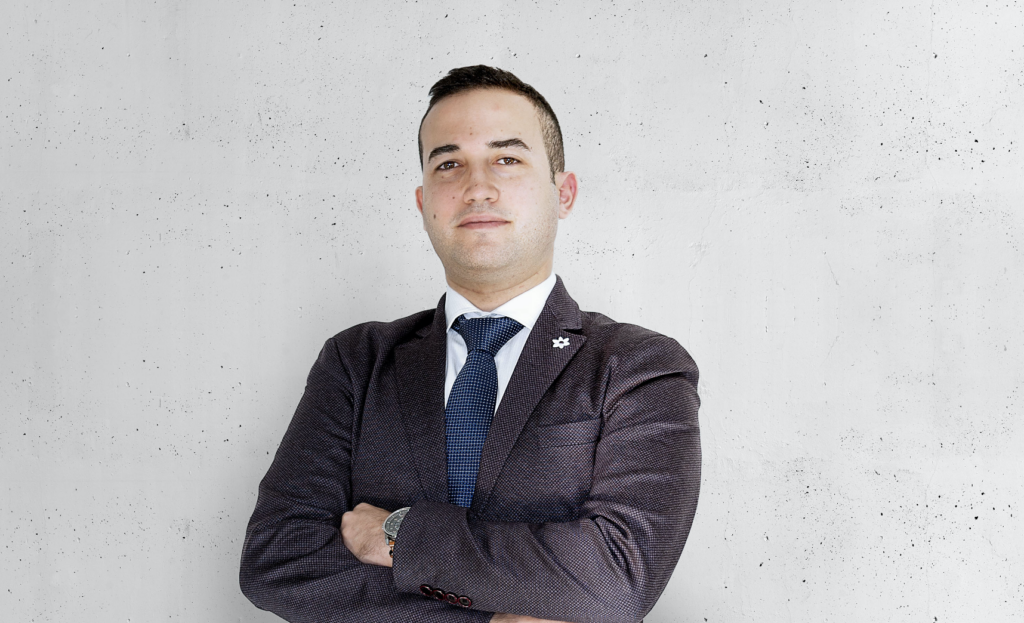
Fools For Facades is hosted at Skyline Facades blog! Samuele Mighali, founder of the independent digital and print editorial platform dedicated to architectural envelope design, material intelligence and facade engineering, talks to Petros Karatzas about what Fools For Facades is actually doing.
Skyline: What is Fools for Façades, and what led you to create it?
Samuele: Fools for Façades started from a very simple observation: there is an incredible amount of knowledge in the façade industry, but much of it remains fragmented or hidden within companies, projects and individual professionals.
Façades are one of the most complex parts of a building, involving architecture, engineering, materials, manufacturing, construction and performance. Yet the people behind this work often receive relatively little visibility outside their immediate professional circle.
FFF was created to make façade knowledge more visible, connect the people behind it and give the industry a place where technical expertise could be communicated in a more accessible and engaging way.
Over time, it naturally grew beyond content into a broader platform involving professionals, companies, research, editorial projects and industry connections.
From your perspective, what do façade professionals still lack today in terms of information, visibility and connection within the industry?
The information exists, but it is often very fragmented.
A façade designer may know very well what is happening within their own consultancy or project, while a manufacturer has a completely different perspective, and researchers may be developing solutions that the commercial side of the industry is barely aware of.
At the same time, some of the most interesting people in the sector are almost invisible publicly. They may be responsible for extremely complex façades, new technologies or important technical decisions, but unless you work directly with them, you might never come across their work.
I think the opportunity is to create better connections between these different worlds and make knowledge easier to discover.
There is often a gap between manufacturers and the architects, façade designers and consultants who actually specify products. How do you see FFF helping to bridge that gap?
This is something we see very clearly.
Manufacturers invest a huge amount of time and resources trying to reach façade designers, architects and consultants because these are often the people who influence or directly specify products on projects.
The challenge is that direct commercial communication can sometimes create resistance. Professionals know immediately when they are being sold something.
With FFF, the communication starts from content and knowledge instead.
If a product, material or system is presented through a relevant project, a technical discussion, a case study or a useful piece of information, the conversation becomes much more natural.
The objective is not to hide the brand. It is to make the story worth reading even if you remove the logo.
That creates a very different kind of relationship between manufacturers and specifiers.
What are some of the biggest shifts you have observed in the façade industry in recent years?
Retrofit is definitely becoming increasingly important.
For many years the industry was heavily focused on new construction, but today there is much more attention on how existing buildings can be upgraded in terms of energy performance, comfort, appearance and carbon impact.
Sustainability has also become much more specific. It is no longer enough to simply say that a product is sustainable. People increasingly want to understand embodied carbon, durability, circularity, reuse and the actual performance of materials over time.
At the same time, technology is changing how façades are designed and delivered. Digital workflows, automation, parametric design and AI are starting to influence different parts of the process.
What I find particularly interesting is that façades are becoming more multidisciplinary rather than less.
FFF sits somewhere between editorial content, technical knowledge and industry networking. How important is credibility when brands communicate with façade professionals?
It is fundamental.
The facade engineering community is very specialised, and people working in the sector usually understand the technical side of products extremely well. If communication is too generic or purely promotional, it is immediately obvious.
Brands need visibility, of course, but visibility alone is not enough.
The content needs to have some real value behind it: a project, an application, a technical challenge, research, data, a new solution or simply a useful point of view.
That is the balance we try to maintain at FFF.
We work with manufacturers, but the content still needs to be relevant to the facade engineering professionals reading it.
The objective is not to pretend the commercial side does not exist. It is to create something credible enough that people actually want to engage with it.
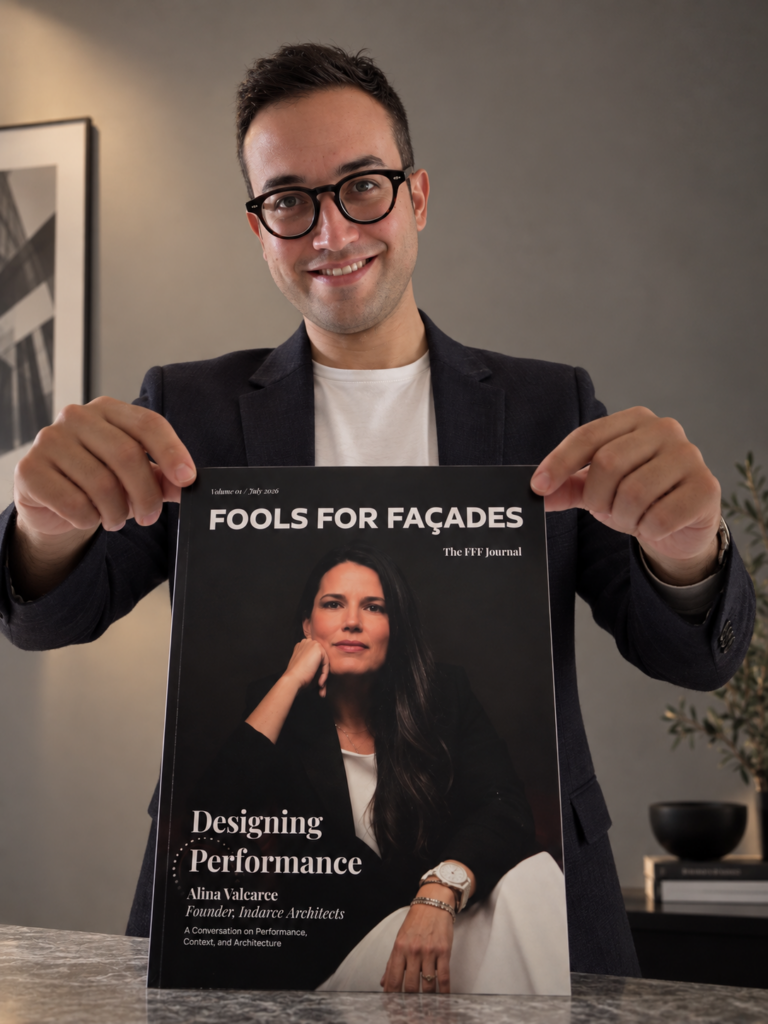
Why did you decide to launch The FFF Journal, and what kind of editorial platform do you want it to become?
The Journal felt like a natural next step.
Digital content moves extremely quickly. A LinkedIn post can reach thousands of people and then disappear from the conversation a few days later.
I wanted to create something slower and more permanent.
The idea is for The FFF Journal to become a quarterly record of what the façade industry is thinking about at a particular moment in time — the projects, technologies, materials, research and people shaping the conversation.
It is not intended to be a traditional technical magazine or a catalogue of products.
I want it to sit somewhere between those worlds: technically credible, visually strong and accessible enough that people actually want to spend time with it.
Through FFF you interact with professionals across many different countries. Do you notice clear regional differences in the way façades are designed, specified or discussed?
Absolutely.
Building regulations, climate, construction methods, budgets and supply chains can change dramatically from one market to another.
In some regions the conversation may be strongly focused on thermal performance and energy efficiency, while elsewhere the priorities may be solar control, extreme temperatures, seismic performance, wind loads or constructability.
There are also differences in how products are specified and in who has the strongest influence during the design and procurement process.
What is interesting, however, is how international the façade industry has become.
A facade engineering consultant may be based in London, designing a project in Saudi Arabia, working with a system supplier in Germany and a façade contractor in Asia.
So regional knowledge still matters enormously, but the industry itself is increasingly global.
Looking ahead, what would you like Fools for Façades to become?
I would like FFF to keep growing without losing the independence and curiosity it started with.
The goal is to continue creating a strong international space for façade engineering professionals, where interesting projects, ideas, research and people can be discovered and shared.
For me, the most important thing is that FFF remains useful to the industry and continues to create connections that would probably not happen otherwise.
I think there is still a lot of room to grow, but I prefer to let that growth happen step by step rather than define everything too rigidly in advance.
*Samuele Mighali is the Founder of Fools for Façades, an independent international platform dedicated to façade engineering, building envelopes and the people shaping the industry. Through FFF and The FFF Journal, he connects architects, façade engineers, consultants, manufacturers and researchers across a global professional community.