Middle East

Fire Safety

Fire Safety and Fire Strategies by Abhishek Chhabra

Abhishek Chhabra is an Engineer and a Post Graduate Diploma holder in Finance. He advocates the need for compliance to standards for improved Fire Safety and Quality across industries for most of the last two decades. He has vast experience of promoting conformity assessment in several industries. He has worked on several Standards and Codes development initiatives, specifically with Bureau of Indian Standards (BIS), ASTM, UAE Fire & Life Safety Code of Practice and Saudi Standards, Metrology and Quality Organization (SASO). He joined Thomas Bell-Wright International Consultants in 2013 and has been the driving force behind the expansion of the Fire Compliance activities. He also owns and drives a blog and a LinkedIn group called Gurus of Testing, Inspection and Certification (www.tic.guru) aimed at expanding the understanding of conformity across the world. What is the critical factor in determining the fire-safety of a glass façade? The starting point to answer this question is the occupancy type of the building which has a glass facade. The type of building (mall / school / hospital / residential tower / office complex, etc.) is what dictates the readiness of the people whose lives in would be in danger in case of a fire and what else might be at risk of the fire. These are among the several key factors that form the basis of Fire-Safety strategy or plan. They help formulate building regulations or guideline documents (Building codes) which are used in more evolved regions in the world. A glass facade like most of the facades have replaced what used to be traditional load-bearing walls more than 50 years ago. They used to undertake several functions as in the image 01 here.  These functions as often undertaken by several components. The key fire safety strategy (of passive fire protection) is implemented by compartmentalizing a fire within the place where it originates. When the building has a glass façade the most important considerations in ensuring fire safety is compartmentation. This is realized at the floor to wall joint (spandrel section) to ensure that the fire can be contained within the floor and does not break into the floors above or below. Fire propagation across the fascia of a pure glass facade is only a matter of concern when there are other elements across the glass facade that could carry a flame or a fire. In certain occupancy types the glass facade also needs to act as the fire containment wall and here these is a fire rated glazing system. We know that the permutations and combinations of raw materials or components that build up a glass facade can be really large. So it becomes critical that assurance mechanisms of the supply of raw materials and components as well as workmanship of installers are very stringent! What is the individual rating of the components of a typical glass facade, i.e. glass, aluminium, silicone etc.? The individual response of components like Glass, Aluminium (Grade), Silicone, etc. in a fire or a scenario that could create a fire is very important (For Glass facades and not for other cladding types). But these individual (reaction to fire or resistance to fire) ratings are meaningless without the assessment of a system behavior. This is part of the steep learning curve that industry and governments have been imbibing in recent times. Reading further from the initial question’s answer then, the real proof of performance of these components for Fire Safety lies only in how they behaved when they are part of a system. The tests would typically be Fire Resistance test used for evaluating compartmentation (ASTM E2307, ASTM 2874, EN 1364-3, EN 1364-4, etc.). The small-scale reaction to fire classifications like as per EN 13501-1 or ASTM E84 then are only indicative of how they could contribute or react to a fire or fire like environment. Does the paint on aluminium contribute on fire? And what about anodization? Pure solid metals when used a facade material are very harmless from a Fire Safety perspective as they are non-combustible. But coatings and paints take these into a different direction. Any organic compound used would have a propensity to contribute to a fire due to its chemical composition. Hence Solid Metal Facade Materials initially thought to be very safe started being reconsidered as they were getting tested for reaction to Fire Classifications. I can share that just because of the what is on a Solid Metal Cladding Sheet, the Reaction to Fire properties could be class B or C or worse even. Refer to Image 02 for better understanding of these Classifications. As for anodization the answer is straight: as long as no organic compound is coming on-to a metal; we are ok. We see that countries have many different fire regulations. Does it happen that a particular assembly / product achieves the highest rating in one country but is rejected in another? Unfortunately, the answer is no. And that is mainly because there is not world-wide agreement on what is highest rating! Can you tell us a few things on full scale fire tests? What is the difference between e.g. NFPA 285 and BS 8414? This is a tough to try in a small post as they are completely different approaches to evaluate fire propagation performance. To start with the geometry and mock-up configuration are completely different. The list continues on mock-up methodology, type of ignition source; measurement methodologies as well as assessment of pass or fail. But this is the case with 20 plus test methods that have been evolving around the world. And unfortunately, more are evolving and getting published. While both these methods have been revised recently, I must share that the BS 8414 Test Methods are only Test Methods. They utilize another published document BR 135 to assess the results of the test method to give an opinion on weather the mock-up system should be considered safe or not. This document, the BR 135 (Fire performance of External Thermal Insulation for Walls of Multi-storey buildings)

Fire Safety and Fire Strategies by Abhishek Chhabra Read More »

Powder Coating with Khalid Shamlawi

Khalid Shamlawi is the Specifications Manager for Jotun Powder Coatings and looks after UAE region as well as Oman, Kuwait, Bahrain, and Egypt. Among his duties is to establish and maintain strong relationships with key upstream clients and project owners to influence specification decision-making at the project management cycle. He’s a keynote speaker for all events in the region with expertise in Powder Coating. Jotun has been developing paints since 1926 and is now one of the world’s largest paint companies. Today, the group comprises of 67 companies and 40 production facilities across the world and employs more than 10.200 dedicated employees. Which type of paint you consider better, powder coating or PVDF? They are both good options, no question on that. For me, it is powder due to the following reasons. VOC contents are negligible for powder, while it is moderate to high for PVDF. You can achieve the required result with powder with a single coat, while you will need up to 3 to 4-coats for PVDF. Colour consistency is easier to control with powder, with PVDF is much harder to control. Easier process for the user. There are a much larger large number of approved applicators for powder coating. Guarantee comes at 25-30 years for all colours of powder, for PVDF is quite vague as it depends a lot on specifications. There is a richer finish on powder. What about anodization? Anodization used to be dominant in our industry but these days belong to the past as its share constantly declines. Main reason is the inconsistency of colour, it is very difficult to control. This is due to variance of metal constituents, temper, anodizing tank chemistry, shape geometry and material load size. As the world becomes more environmentally conscious, we are moving towards healthier practices. Anodizing has low friendliness, there are concentrated acid baths (vapour concerns) and waste disposal concerns. Further reasons that anodizing market shares continues to decline is the very limited colour and finish choices and the high resource consumption. What is the optimum paint thickness for powder coating?   We measure dry film thickness as per Qualicoat standards. In the final assessment, none of the measured values shall be less than 80% of the specified minimum value otherwise the thickness test as a whole will be considered unsatisfactory. The results shall be assessed as shown by four typical examples (minimum thickness for coatings of 60 μm): Example 1: Measured values in μm : 82, 68, 75, 93, 86 average: 81 Rating: This sample is satisfactory. Example 2: Measured values in μm : 75, 68, 63, 66, 56 average: 66 Rating: This sample is good because the average thickness is more than 60 μm and because no value measured is less than 48 μm (80% of 60 μm). Example 3: Measured values in μm : 57, 60, 59, 62, 53 average: 58 Rating: This sample is unsatisfactory and comes under the heading “rejected samples. Example 4: Measured values in μm : 85, 67, 71, 64, 44 average: 66 Rating: This sample is unsatisfactory although the average thickness is more than 60 μm. The inspection is unsatisfactory because the measured value of 44 μm is below the tolerance limit of 80% (48 μm). Across different markets and climates, the choices of material for windows varies. In Northern Europe PVC is dominant, while as we move to Mediterranean countries and Middle East, aluminium takes over.   There is no question, aluminium is a far better material than uPVC. I can sum up advantages as below. Much more durable. An aluminium window has lifecycle of more than 60 years while uPVC is approximately 25-40 years. Maintenance. Aluminium does not crack, peel or rot and there is ease to change a broken glass by removing the glazing beads. uPVC on the contrary is a very soft material that can easily get scratched while you have to exchange the whole vent frame if glass is glued in for stability. Aluminium has high stability due to great strength to weight ratio and high wind as well as burglary resistance. uPVC needs steel or aluminium reinforcement steel to reach the same stability in same sizes. There is great colour variety in aluminium through powder, liquid or anodizing. On the other hand, there are only limited shades of whites, greys and browns and not all uPVC is UV resistant which leads to colour fading. There is lot of discussion lately for fire safety and regulation. This debate is global since there are several incidents with fires in building. Does paint contribute to fire performance and how much? We need to be able to interpret the fire classification test results. The latest Dubai Civil Defense Regulation has adopted European Standard EN 13501-1. A typical classification comes as e.g. B – s1- do. Let’s see what this means. First digit is the reaction to fire classification which determines how much (if any) a building material contributes to the spread of fire. Class A1 – A2     = non-combustible materials. Class B, C, D        = ranges from very limited to medium contribution to fire. Class E, F             = high contribution to fire. The “s” part relates to the total smoke propagation, during the first 10 minutes of exposure. These determine a “smoke” index: s1 = little or no smoke. s2 = quite a lot of smoke s3 = substantial smoke. The “d” part relates to the flaming droplets and particles, during the first 10 minutes of exposure. d0 = none. d1 = some. d2 = quite a lot. According to EN 13501-1, Jotun Super Durable paint fall under A2-s1,d0 category, while Jotun Durasol is plain A1.

Powder Coating with Khalid Shamlawi Read More »

Skyline Facades

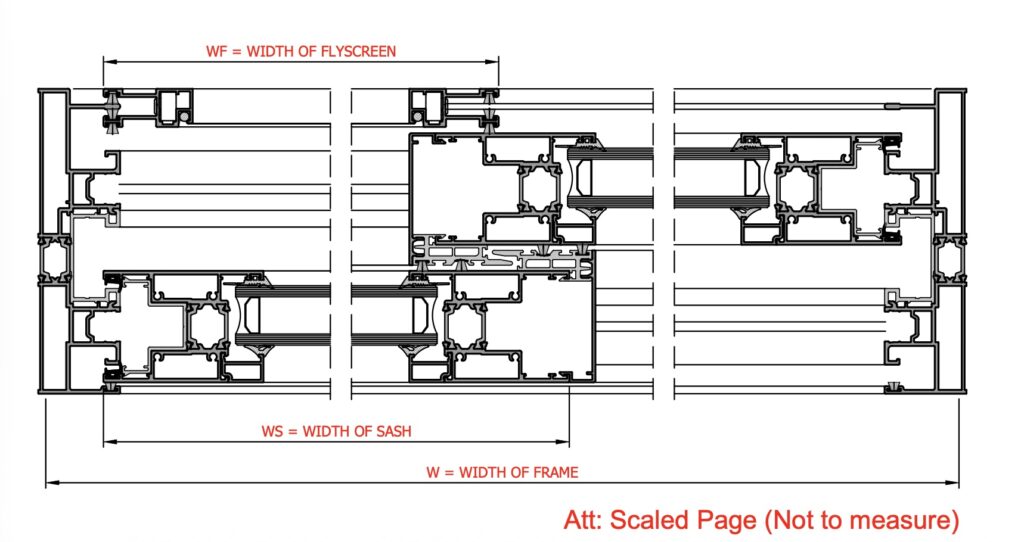
Design of Lift & Slide Aluminium System

At Skyline Facades, we design all kinds of bespoke aluminium systems. We have recently completed the design for a Lift and Slide thermally broken system on behalf of a prestigious client of us, for the Middle East market. #skylinefacades #systemsdesign #aluminiumsystems #liftandslide #sliding #middleeast #doorsandwindows #consultants #design #aluminium #systems #slidingdoors #liftandslide #glazing Read More

Design of Lift & Slide Aluminium System Read More »

ACS International School Doha

Our project ACS International School in Doha comes live! It’s always good to see your works realized. We have supplied Facade Engineering Services, i.e. Concept Drawings, Shop Drawings, Structural Reports, Fabrication Drawings and As-Built for the Building Envelope. We covered many items such as Curtain Walls, Louvers, Cladding, Fins, Fire-Rated Curtain Walls, Skylights and Canopies. We are proud of our work!  Visit us in www.skylinefacades.com, or send us email at info@skylinefacades.com #facadeengineering #architecture #buildings #envelope #facade #teamwork #buildingenvelope #shopdrawing #engineering #drawings #outsourcing #skylinefacades #glazing #doorsandwindows #curtainwall #cladding #louvers #fins #firerated #skylights # canopies #facadedesign #facadeconsultancy #glassfacade #facadestructuralengineering https://www.linkedin.com/company/2331156

ACS International School Doha Read More »

Shop Drawings ACS School almost there

  We are almost there! One of the last Shop Drawings to be submitted for our international school project in Doha. This detail refers to Internal Fire-Rated Curtain Walls. Skyline Facades has provided Facade Engineering Services for the whole building envelope. Concept Design, Shop Drawings, Facade Structural Calculations and Fabrication Drawings. Visit us in https://www.skylinefacades.com/ or send us email at info@skylinefacades.com #facadeengineering #engineering #architecture #drawings #teamwork #façade #doha #doorsandwindows #buildings #envelope #glazing #outsourcing #skylinefacades #cladding #facadedesign #curtainwall #firerated #buildingenvelope #shopdrawing #facadeconsultancy #glassfacade #facadestructuralengineering  

Shop Drawings ACS School almost there Read More »